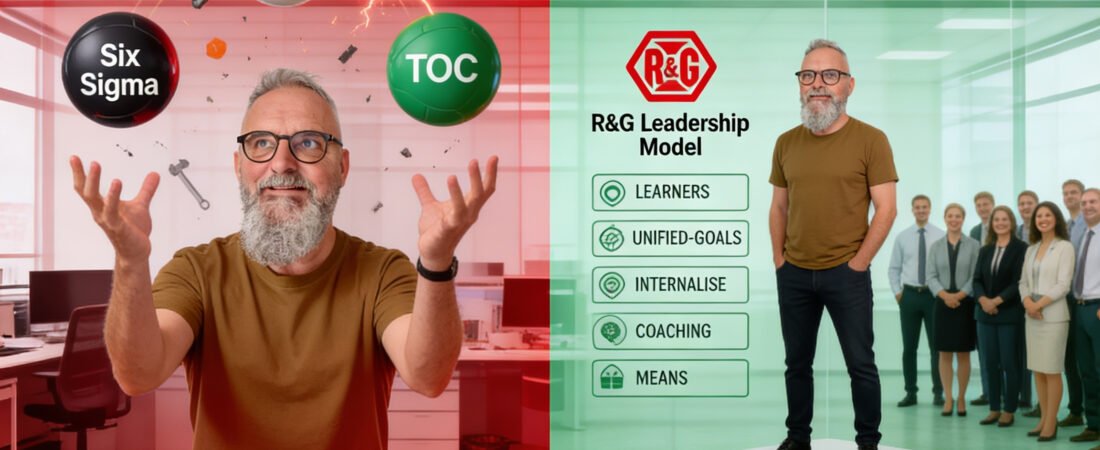
Everyone loves a shiny new methodology.
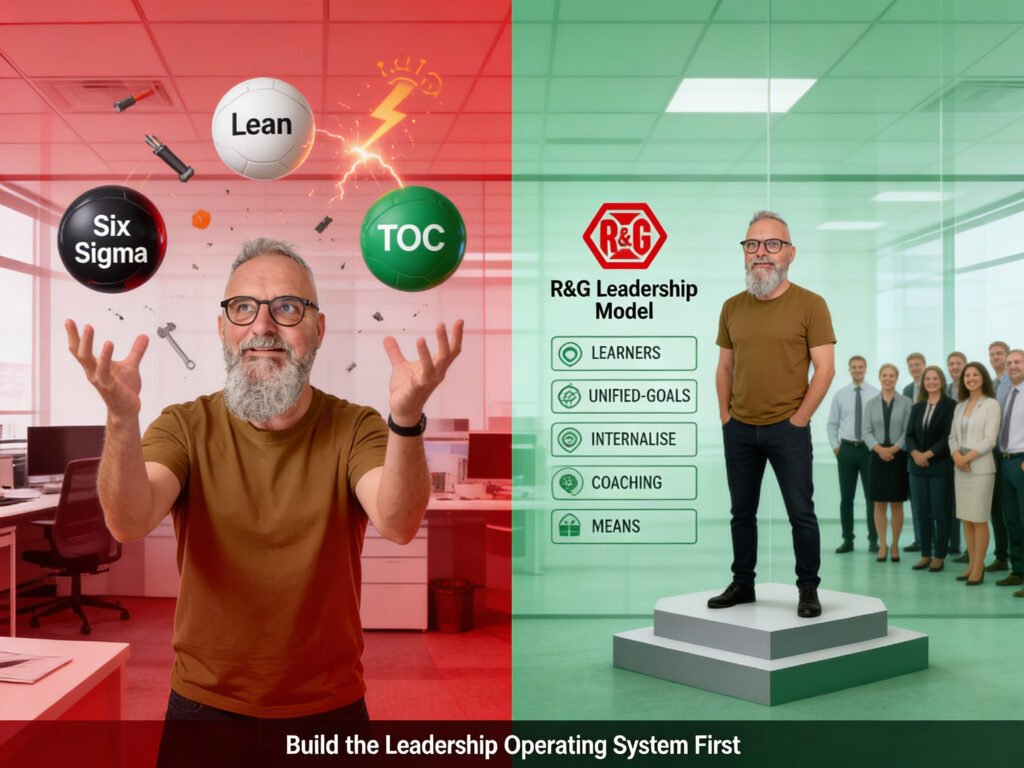
Lean. Six Sigma. Theory of Constraints. Companies invest heavily in these continuous improvement systems, expecting them to deliver lasting breakthroughs in performance and culture.
Yet, time after time, the gains erode after 12–24 months. The tools lose momentum. The language fades. Another well-intentioned “transformation” quietly joins the corporate graveyard.
I’ve seen this pattern repeatedly — and I’ve lived it myself.
A few years ago, I was deep in the trenches trying to do three very difficult things at once: strengthen leadership competence across the team, roll out major new operational systems, and deliver against intense headquarter pressure for quick results.
The truth? I didn’t juggle it well enough.
In the heat of deadlines and rising stress, the deeper leadership work kept getting deprioritised. We ran workshops on awareness, psychological safety, and better decision-making, but when real problems hit and cortisol spiked, I (and others) sometimes slipped back into old default patterns — pushing harder, controlling more, or avoiding the uncomfortable conversations that were necessary. As a result, the new systems and processes never became truly embedded.
On reflection, I can see exactly where I went wrong. I treated the new systems and processes as the main event and leadership behavioural development as something we could build “in parallel.”
In reality, the leadership operating system was the primary constraint (not having the right leaders in the right places is for another story). Without the right leaders consistently choosing better behaviours under pressure, even a strong technical system had little chance of sticking.
That experience taught me a clear lesson I now share openly:
Most continuous improvement initiatives don’t fail because the methodology itself is flawed.
They fail because we try to bolt sophisticated tools onto an underdeveloped leadership foundation.
We’re naturally drawn to the concreteness of Lean, Six Sigma, or TOC — the toolkits, belts, dashboards, and measurable projects. They feel like “real work.”
Developing genuine leadership behavioural competence with the right people feels slower, messier, and harder to measure in the short term, so it gets sidelined until pressure exposes the gap.
Here’s the uncomfortable truth: Many organisations don’t primarily have a process problem.
They have a leadership behavioural competence problem that repeatedly shows up as hidden waste, resistance, blame, siloed thinking, and eventual regression to old habits.
This is precisely why I advocate changing the sequence.
Instead of trying to juggle leadership development and system implementation simultaneously under heavy corporate pressure, make sure you have the right people in place, then start to educate them in the correct Leadership operating system. Something like my; Red & Green Leadership Behavioural Model.
The Red & Green model helps leaders clearly distinguish between Red behaviours (defensive, reactive, controlling, ego-protecting responses that flare up under stress) and Green behaviours (curious, courageous, collaborative, and value-aligned responses that build trust and sustainable performance).
Being Brave is the vital practice within this model — the repeated choice, moment by moment, to shift out of Red reactivity and into Green leadership, especially when it’s uncomfortable.
As leaders progressively adopt and internalise the Red & Green model, they naturally begin modelling the exact behaviours that make continuous improvement stick: genuine curiosity instead of defensiveness, psychological safety instead of fear, accountability without blame, and consistent execution when pressure is highest.
Only then does introducing Lean, Six Sigma, or TOC have a realistic chance of long-term success — because the human operating system is finally strong enough to support and sustain the technical systems.
Emotional intelligence and awareness are important starting points.
But without deliberate behavioural intelligence — the ability to notice the Red flip in real time, pause, regulate, and consciously choose Green action — even the best methodologies will eventually fade.
If you’re preparing to launch (or relaunch) a continuous improvement initiative, ask yourself these honest questions first:
- Are we investing as much energy in embedding the correct Leadership Behavioural Model as we are in tools and training?
- When pressure rises, do our leaders default to Red reactivity or consciously choose Green, brave responses?
- Are we modelling the behaviours we expect the rest of the organisation to adopt?
Sustainable improvement isn’t about chasing the next shiny methodology.
It’s about building leaders whose daily behavioural choices make any good methodology really work and stick.
The organisations that understand this don’t just implement better tools.
They become fundamentally better at improving — because their leadership behavioural foundation is solid.
I’d love to hear your experiences.
Have you lived through a situation where leadership development and system implementation collided under pressure? What did you learn the hard way?That’s all folks, until the next time bye for now.